Broker Check


Really its all about you...

Really its all about you...

To set you on the right financial path, we must understand your unique situation. We do this through a Financial Needs Analysis.

The Rule of 72.

The Rule of 72.

The Rule of 72 is a quick way to estimate the number of years required to double your invested funds at any given rate of return. It works by dividing the rate into 72. For example, money invested at a 3% rate of return, should double in 24 years. And money invested with a 7% rate should double in 10 years.

The Magic of Compounding.

The Magic of Compounding.

When the interest on your investments earns interest, it allows you to save more in the long run. If you start with $1,000 with an interest rate of 4%, simple interest will provide you with an extra $40 at the end of the year. When you compound, you’ll continue to gain interest on your original investment, but also on the interest you already earned.

Ways you can save and invest for the future include:

Collapsible Sections

Both annuities and mutual funds are types of products that allow you to spread your savings across different investment mediums (i.e., stocks, bonds, etc.). The biggest difference between the two is that annuities are often considered a less-risky option—because there is a guarantee* on the money you invest.

There are two main types of annuities: variable and fixed—and we offer both. The rate of return for variable annuities is based on the performance of underlying investment sub-accounts that you choose based on your preferred level of risk and investment objectives. The rate of return for fixed annuities is based on a guarantee that gains will not drop below a certain percentage of the invested amount.

Like annuities, mutual funds pool money from individual and institutional investors, and then use that money to invest in a selection of investment mediums. There are no guarantees on mutual funds, so the value of your funds relies completely on the performance of the mediums.

Managed money accounts allow you to place your invested funds in the hands of a professional for a predetermined annual fee — rather than buying and selling the securities yourself. This professional will help you determine an actionable strategy and investment portfolio tailored to help you meet your goals.

There are two primary types of retirement accounts to consider: IRAs and 401Ks. Both are popular tax-advantaged investment options. A 401K is a plan sponsored by an employer that allows employees to invest a piece of their paycheck, pre-tax, and offers opportunities for employer-matched contributions. Taxes are paid when money is withdrawn from the account.

Conversely, an Individual Retirement Account (IRA) is an individual account not sponsored by an employer, and offers more freedom for choosing investments since they are not limited to an employer’s plan. There are two different types of IRAs: Traditional and Roth. Contributions are made to a Traditional IRA with un-taxed money and is only taxed upon withdrawal. For Roth IRAs, contributions are made with previously-taxed money, but you’re not taxed when withdrawing funds.

Buy Term and Invest the Difference...

Don’t get stuck with a policy that doesn’t properly protect your family.

Don’t get stuck with a policy that doesn’t properly protect your family.

Term life policies are easier to understand and more affordable than whole life insurance. A 30-year-old male, for example, may pay around $4,675 a year for whole life versus only $242-$403 a year for term life.2

This cost difference allows you to invest the saved money and/or apply it toward a debt—bringing your financial wellness plan full circle

2 “The Differences Between Term and Whole Life Insurance” NerdWallet, March 29, 2017


With an actionable debt reduction plan, you’ll be on your way to financial independence.

With an actionable debt reduction plan, you’ll be on your way to financial independence.

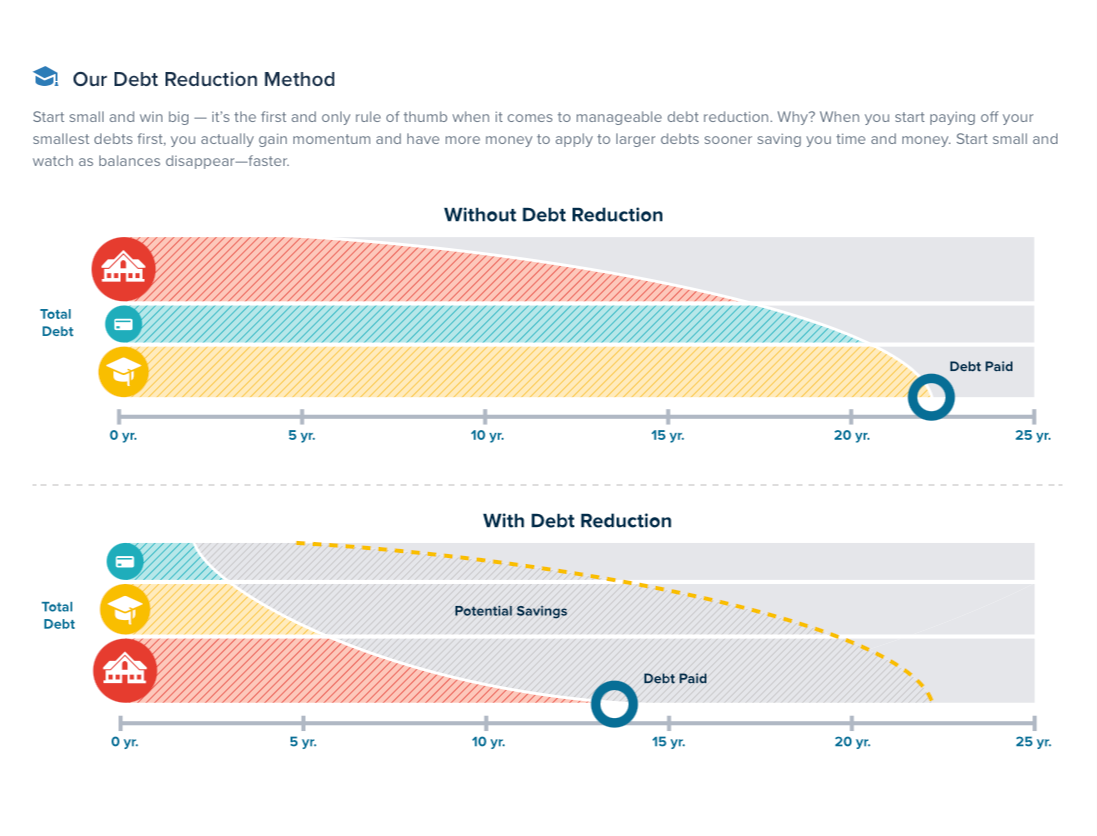
We get it. The debt reduction process is overwhelming. Determining the best plan, and sticking to it, takes discipline and budgeting. But it gets easier as you go, especially as your remaining balances reduce and, eventually, disappear.

The debt reduction method is a great place to start. Pay off debts, starting with the smallest, and watch as balances disappear. The more you pay off, the more available funds you have to put toward remaining debts. Like riding a bicycle downhill, your debt reduction plan gains momentum and becomes easier and less overwhelming over time.

Client Centered

Client Centered

Whether you are investing to build wealth, protect your family, or preserve your assets, our personalized service focuses your needs, wants, and long-term goals.

Our team of professionals have years of experience in financial services. We can help you address your needs of today and for many years to come. We look forward to working with you.